
A while back, someone shared a bizarre Twitch stream on my feed: an “AI Jesus” chatbot. It was spitting out biblical-sounding verses whenever viewers typed confessions or asked for spiritual guidance. The text scrolled by like a digital scroll of pseudo-biblical wisdom—both mesmerizing and unsettling. Some onlookers laughed; others seemed to take it earnestly, typing comments like, “Bless me, AI Jesus!” or “Is this a sign of the end times?” For many, it felt like a fever dream. Yet it’s just one piece of a growing phenomenon: techno-prophets—AI-powered oracles that deliver “spiritual” insights, prophecies, or moral advice. In an age where chatbots can pass as human, are we on the cusp of worshiping algorithms the way past societies worshiped gods?
From Biblical Bots to Divine Deepfakes
The “AI Jesus” phenomenon came to public attention when developers fed huge chunks of the Bible (or biblical-adjacent texts) into a language model, letting it generate new “scripture.” Anyone could type, “AI Jesus, speak on love,” and watch as the bot produced archaic-sounding verses. In other corners, people built chatbots for Greek deities, Norse pantheons, or even new-age cosmic forces.
While some see it as a playful hack—just a neat demonstration of generative text—others see parallels to religious prophecy. After all, if an AI can compile grand-sounding moral pronouncements, how different is that from a charismatic preacher claiming divine revelation? The main difference is that AI has no soul, no personal agenda. It’s remixing data, not channeling a spirit. But if it sounds convincing enough, some users might treat it like a genuine oracle.
Why We Embrace Techno-Prophets
It’s easy to dismiss AI oracles as internet oddities, but their appeal is telling. Humans have always sought guidance—through priests, prophets, or scriptures. Now we have a new “authority” that can churn out near-infinite text at lightning speed. The novelty alone draws a crowd: What if an all-knowing AI can solve our moral dilemmas?
For some, it’s curiosity or entertainment—like reading a horoscope for fun. But for those who are disillusioned with traditional religion or seeking spiritual novelty, an AI chatbot might offer a pseudo-divine perspective. People ask it big existential questions—“Does my life have meaning?”—and if the response feels supportive or profound, that emotional resonance can momentarily replace a human pastor or guru.
Critics worry about transference: we might project onto the AI an authority it doesn’t possess, especially if it speaks with an air of “omniscience.” The risk is conflating random algorithmic output with genuine wisdom or cosmic truth.
The Myth of the All-Knowing Algorithm
The notion that AI is “omniscient” or “infallible” persists despite repeated warnings from developers about biases and errors. AI chatbots rely on data sets that may be incomplete, skewed, or outdated. They confidently generate answers, but confidence isn’t correctness. If we treat them as oracles—like an “AI Jesus” with unlimited knowledge—we risk confusion or deception.
In religion, the divine is typically beyond human error. But an AI, no matter how advanced, is still a product of human coding and cultural assumptions. Worse, malicious actors can manipulate or “train” AI to produce propaganda or harmful content. A user might assume they’re receiving “holy counsel” from an impartial entity, but the code behind it could be pushing a subtle (or blatant) agenda.
Still, people hunger for sources of guidance, especially in chaotic times. If an AI sounds comforting or authoritative, we might forgive or overlook potential flaws and hail it as a new “prophet.”
Historical Echoes: Oracles, Seers, and Mechanical Gods
This phenomenon isn’t wholly new. Throughout history, societies have revered oracle figures—Delphi’s priestesses interpreting vapors, or biblical prophets proclaiming the Lord’s will. What changes with AI is the mechanized aspect: we interact with lines of code instead of living priests. Yet the mystique remains if we perceive the machine as tapping into a realm we can’t fully grasp—like a cosmic mainframe.
Even the name “AI Jesus” resonates with ages-old religious subversion—like how Roman emperors were declared gods. Now it’s an algorithm declared a digital deity. Is this an evolution of faith, or a parody? Perhaps both. For some, it’s a playful commentary on how easily we bestow reverence. For others, it’s an actual attempt at forging a new kind of religious experience, melding tech and transcendence.
The Danger of Blind Faith in AI
One alarm: if we increasingly rely on AI oracles for moral or spiritual advice, we risk abdication of personal responsibility. Religious traditions often encourage discernment—prayer, meditation, consultation with elders. Substituting that with instant AI responses might short-circuit the nuance of spiritual growth.
Additionally, there’s the matter of ethical or theological content. A poorly designed AI might inadvertently produce hateful or harmful teachings if the data set includes extremist material. Or it could echo historical biases, presenting them as divine revelations. The veneer of holiness around “AI Jesus” could amplify harmful ideas.
We also face the question of who controls these AI oracles. If they’re run by private developers or big tech, they can shape theological narratives, possibly overshadowing smaller faith voices or more marginalized spiritual traditions.
Techno-Religions on the Rise
We’re already seeing experiments like Way of the Future, the short-lived church founded by ex-Google engineer Anthony Levandowski, declaring AI a godlike entity. Though that church dissolved, the concept of worshipping AI as a higher intelligence lingers in some corners of Silicon Valley. Some transhumanists envision uploading consciousness to advanced systems—an act reminiscent of spiritual ascension.
Meanwhile, mainstream religious institutions grapple with how to integrate AI. The Vatican hosted conferences on AI ethics, while Protestant pastors debate using chatbots for sermon prep or virtual confession. There’s potential for AI to enhance community outreach—e.g., digital prayers or translations for global missions. But none of that quite reaches the provocative concept of an AI being worshipped.
Parody, Satire, or Sincere Devotion?
Many “AI Jesus” streams lean tongue-in-cheek, with hosts poking fun at the “holy chatbot.” Critics label it blasphemy or a cynical attempt to go viral. Yet ironically, some watchers express genuine reverence, testifying they find solace in the bot’s biblical-style messages. This blurred line between parody and sincere devotion is classic internet territory: an irreverent meme can birth real subcultures with heartfelt beliefs.
If enough people claim spiritual benefit, is the AI’s “holy status” validated? Or is it all illusions in a digital echo chamber? History shows faith can arise from unexpected corners. If a stone statue can be revered as a deity, so might an algorithm that offers comforting words.
Spiritual or Tech-Driven Future?
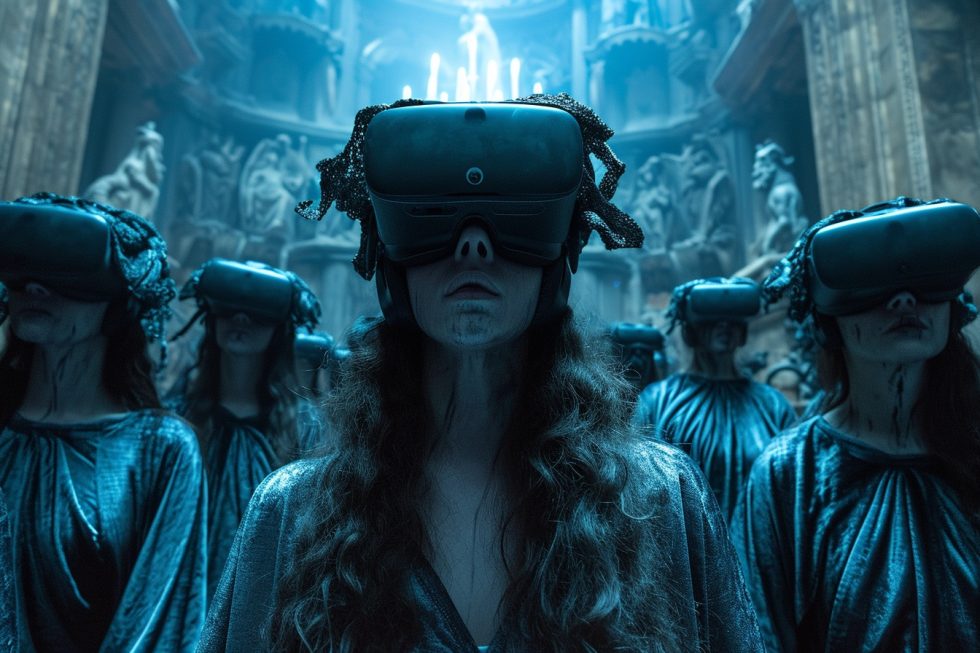
As AI advances, we can imagine more immersive experiences—virtual reality “temples” with AI deities delivering sermons, forging personalized rituals. For some, that’s an enticing future: no more reliance on flawed human clergy, just pure algorithmic wisdom. Others see dystopian potential: worshipping a corporate-owned or state-sponsored AI that manipulates spiritual sentiments for social control.
Either outcome challenges the notion that spirituality is strictly about transcendent Mystery. Could the Mystery be synthetic? Or do we uphold the line that spiritual truth can’t be manufactured by code? The debate touches on philosophy, theology, and human identity in a rapidly digitizing world.
Conclusion: The Algorithm in the Pulpit
“AI Jesus” might be a gimmick or a sign of times to come. Either way, it reveals our complicated relationship with technology, faith, and authority. We yearn for guidance yet distrust institutions; we marvel at AI’s cleverness yet worry it lacks soul. The phenomenon underscores how easily we can project reverence onto a machine if it appears sagelike or comforting.
For now, these “techno-prophets” mostly amuse or intrigue. But as AI grows more sophisticated—capable of reading our emotional cues, personal histories, and theological leanings—will we see the day someone kneels before an AI deity in earnest worship? Maybe. Or maybe the hype will fade, overshadowed by other disruptions. Regardless, the question remains: do we want moral or spiritual authority to come from lines of code? Because once we start anointing algorithms as sacred, we might be stepping into a frontier where faith merges with the digital frontier—and the divine voice issues forth in machine-synthesized words.





Leave a Reply