
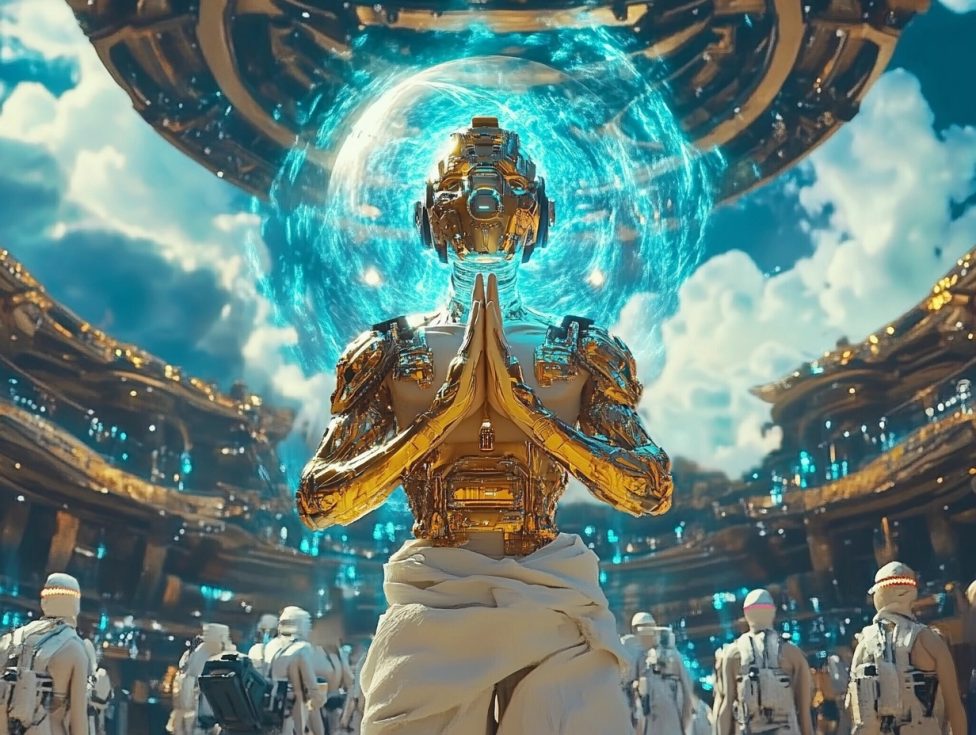
A few months ago, I stumbled upon a peculiar Twitter account claiming to be Apollo, the Greek god of music and prophecy. Its bio read: “God of Sunlight, part-time Oracle, here to share cosmic vibes.” Scrolling through the feed, I saw witty references to ancient myths—Apollo mocking Hermes for stealing his cattle, complaining about the modern music scene, and occasionally sharing “prophetic” tweets about world events. The account had thousands of followers who engaged earnestly, leaving comments like “Hail, lord of the lyre!” or “Apollo, please bless my new indie album!” It was weird, playful, and oddly captivating. And it was far from the only one: from @SassyHermes to @ValkyrieWarCry, social media hosts a blooming pantheon of irreverent, god-themed profiles.
But is this just meme culture run amok, or does it point to a deeper modern fascination with old deities? At a time when conventional religion sometimes struggles to connect, are these digital gods forging a new cultural presence—blasphemous parodies or reimagined spiritual revivals?
A Long, Quirky History of Parodying Gods
The idea of taking ancient gods and repurposing them for new contexts isn’t exactly novel. For centuries, playwrights and authors have used mythological figures for comedic effect or social commentary. From Aristophanes lampooning the Greek pantheon to modern fantasy novels subverting Norse legends, we’ve always been comfortable twisting divine figures to suit the zeitgeist. Twitter and TikTok merely give these reworkings a real-time, interactive platform.
So if you see Odin complaining about traffic, or Anubis giving tips on how to handle your dog’s afterlife, it follows a tradition of turning mythology into something approachable—what the Romans called interpretatio romana, the adaptation of foreign gods into local contexts. Our “local context” just happens to be social media.
Meme Culture Meets Mythology
Meme culture thrives on irony, absurdity, and the collision of disparate references. Recasting an ancient deity as a snarky Twitter personality hits all those notes. It’s silly, subversive, and plays on the dissonance between thousand-year-old mythic gravitas and the throwaway humor of tweets. Users who follow these accounts appreciate the comedic edge—imagine Zeus tweeting about thunder problems while stuck in a Zoom meeting.
Yet beyond the laughs, there’s a subtle reverence. People who respond with “All hail!” or ask the deity for blessings might be half-joking, but they’re also indulging in the imaginative fantasy that these gods are once again active participants in our world. It’s reminiscent of how fans behave in fantasy fandoms, except this time the subjects are not Harry Potter or Marvel heroes but ancient gods with millennia of lore behind them.
Are These Actual Spiritual Revivals?
One intriguing angle is the neo-pagan or reconstructionist movements that genuinely worship ancient deities. For instance, there are modern Hellenic polytheists who hold rituals to Zeus, Hera, Apollo, and the rest, seeking a revived form of classical Greek religion. Some of these practitioners also maintain online presences, though often in a more reverent tone than the meme accounts.
Occasionally, digital parodies bleed into real spiritual practice. A comedic Twitter handle might pique someone’s interest in, say, the Egyptian pantheon, prompting them to learn about actual Kemetic traditions. In that sense, comedic or irreverent accounts can serve as gateways, inadvertently leading people toward deeper engagement with ancient goddesses and gods.
Of course, many devout pagans bristle at the irreverence, worried that it trivializes the gods they truly honor. For them, comedic “god accounts” might feel disrespectful, akin to mocking a beloved ancestor or revered saint. On the flip side, some pagans find it refreshing that these gods are being kept culturally alive—even if the medium is comedic Twitter. It’s a lively debate: does digital parody expand the pantheon’s relevance, or dilute it into internet kitsch?
Why We Crave Mythic Archetypes
Set aside actual worship for a moment. Even in purely secular circles, ancient gods serve as powerful archetypes. Jungian psychology often references mythic figures as expressions of collective unconscious—universal symbols that help us navigate human experiences like love, war, fertility, or death. In modern pop culture, these gods pop up in everything from Assassin’s Creed expansions to Netflix dramas. They speak to our primal fascination with cosmic narratives.
Seeing them on Twitter might be the next logical step in a world where everything is brand-friendly and meme-ready. The comedic framing could reflect our modern coping mechanism: we face a tumultuous reality (climate crisis, pandemics, political chaos), and we need comedic, mythic archetypes to help us process it. By turning gods into social media personalities, we ironically reaffirm their archetypal power, even if we do so with a wink.
Fans, Fandoms, and Ritual 2.0
Digital communities often behave like fandoms. If a Twitter deity amasses a dedicated following, people might create fan art, retweet the deity’s “wise proclamations,” or role-play elaborate mythic crossovers. It mirrors how fans treat celebrities or fictional characters, but with an ancient spin.
In some corners of the internet, you’ll find virtual shrines: blog pages or Discord channels dedicated to a particular deity, where modern devotees or admirers share experiences—dreams, symbolic omens, or personal revelations that they attribute to that god’s influence. Some hold online ceremonies, lighting candles at home while collectively reciting a prayer or chant in a Zoom call. It’s a phenomenon that suggests a renewed sense of communal ritual, albeit mediated through screens rather than temple altars.
Does this constitute “legitimate” worship or just fandom role-play? The line is blurred. One person might treat it as heartfelt devotion, another as cosplay. In either case, the effect is the same: the deity’s mythos is revived in a collective imagination, forging a new kind of worship or veneration in bits and bytes.
Parody, Blasphemy, or Innovation?
From a traditional religious perspective, impersonating a deity on Twitter could be seen as blasphemous. After all, you’re basically putting words in an ancient god’s mouth, usually satirical in nature. But for many, especially younger generations, it’s an inventive form of cultural commentary. They might argue these “god accounts” are no different than comedic rewrites of Shakespeare or modern takes on fairy tales. It’s a testament to the malleability of myth—these stories adapt to reflect the concerns and humor of each era.
Meanwhile, some people might say it dilutes genuine spiritual traditions. If you’re a practicing devotee of Odin, seeing a Twitter handle that depicts him as a beer-chugging frat boy might feel disrespectful. Yet the internet thrives on irreverence, so any notion of maintaining a solemn, “correct” portrayal of deities online is probably a losing battle. The question is whether playful engagement can coexist with sincere reverence. Perhaps the digital sphere is big enough for both.
A Glimpse Into Our Psyche
Ultimately, seeing ancient gods become social media personas suggests that we, as a culture, aren’t done with mythic frameworks. Even if organized religion diminishes for some, the human mind still gravitates toward grand narratives and symbolic figures. The difference is that we now have the tools to remix those narratives in real time, broadcasting them to global audiences with just a tweet.
It points to a desire for something beyond the mundane, even if it’s cloaked in snark and irony. We live in a hyper-rational, data-driven society, yet references to “Apollo, God of Plagues” might still feel relevant when discussing pandemics. Or “Freya, Goddess of Love,” might pop into a conversation about heartbreak. Perhaps we evoke these deities to fill a gap left by purely secular discourse. They add color, archetypal depth, and a touch of magical thinking to an often sterile digital environment.
The Future of Online Myth-Making
Will these Twitter gods endure? Possibly. If anything, we might see more advanced iterations—maybe VR or AI-driven “god-bots” that hold interactive oracles, responding to user queries like digital Delphi. That raises questions about authenticity and exploitation. Could an AI “Zeus” become as revered as the real mythic figure once was? Or is it all one big joke that eventually fizzles out?
Given how quickly internet trends evolve, we might see short bursts of worship-like fandom around new pantheons each year. Or certain accounts might cement themselves as iconic comedic voices, bridging pop culture and ancient myth in perpetuity. In either case, it’s a reminder that myths never truly die; they just shape-shift to match new media and sensibilities.
Conclusion: Timeless Archetypes, Modern Platforms
Watching gods on Twitter is both humorous and revealing. It reveals our ongoing fascination with higher powers, even in an era that prides itself on rationality. We’re drawn to these mythic characters not just for laughs, but because they embody enduring human themes—love, war, prophecy, trickery, creation, destruction. By resurrecting them online, we’re weaving ancient symbolism into the digital tapestry of the 21st century.
Whether you find it blasphemous, amusing, or borderline devotional, one thing’s clear: the presence of “deities” on social media speaks to myth’s unkillable nature. In a world so reliant on ephemeral tweets and memes, ironically, we still crave the eternal. And so old gods gain new followers—some serious, some jesting—proving that even in the digital realm, ancient stories still have the power to captivate us, keep us guessing, and maybe even inspire us to see the sacred in the most unexpected of places.




Leave a Reply