
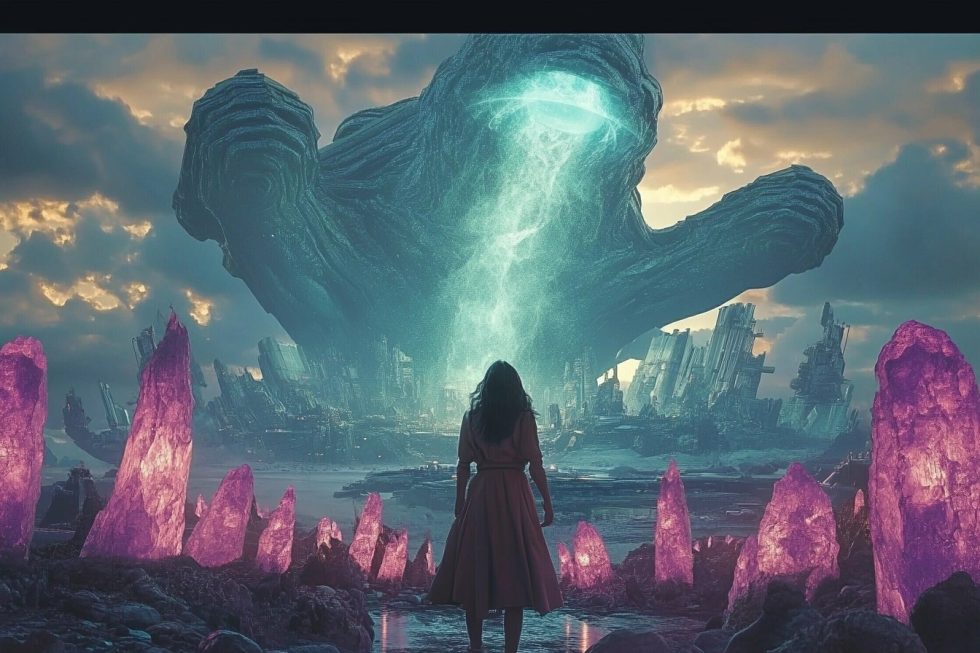
I once spent a whole afternoon at a crystal market, rummaging through dusty boxes of amethysts and smoky quartz. The distinct coolness against my palm felt grounding, almost electric. Now imagine my shock when I discovered “crystal NFTs” selling online for thousands of dollars. The pitch? Own a digital asset that “vibrates” at a certain frequency, just like its real-world counterpart—but on the blockchain.
Where Tech Meets Mysticism
The concept might sound bizarre, but it’s part of a larger trend. Platforms like Ethernity or OpenSea are flooded with so-called “spiritual NFTs,” including virtual tarot decks, zodiac-themed profile pictures, and even AI-generated mandalas. Proponents say we’re witnessing the next evolution of spiritual commerce, where intangible tools (like reiki attunements or crystal energies) can be minted, traded, and verified digitally.
A Millennia-Old Practice Gone Virtual
Historically, crystals have been revered for their supposed healing properties. Ancient Egyptians wore lapis lazuli to gain cosmic insight; early Chinese medicine prized jade as a bridge between Heaven and Earth. Fast-forward to the 21st century, and many of us still find comfort in wearing a rose quartz necklace or slipping a piece of tiger’s eye into our pockets. Now the NFT realm says: “Why bother with a physical gem when you can have a token that represents the same frequency?”
Critiques and Ethical Quandaries
Of course, critics line up quickly. For one, does a .JPEG of an amethyst truly carry any energy if you can’t hold it? Skeptics call it the ultimate digital snake oil, yet another example of hype overshadowing substance. Then there’s the environmental concern: the blockchain can be energy-intensive, leading some spiritual folks to label crypto “antithetical to ecological harmony.” Even the widely discussed shift of Ethereum to a proof-of-stake model might not fully quell worries about carbon footprints.
Personal Reflections: Holding Stones vs. Owning Pixels
I’ll admit, I’m torn. Part of me loves rummaging through physical stones, feeling their weight and texture. Another part of me recognizes we live in a digital era, where intangible assets—music, eBooks, streaming services—already shape our daily lives. Why not spiritual assets, too?
Yet, there’s a point where I can’t shake the feeling that something essential is lost. The synergy of human touch, the subtle variations in natural quartz, the imperfections that make each stone unique—none of that translates into pixels. If the essence of crystal healing is a tactile, sensory experience, can it survive as a minted file?
The Future of Spiritual Commerce
Despite my skepticism, I see potential. We might be heading toward a hybrid model, where physical items come with NFT counterparts for authenticity. Alternatively, virtual spaces like VR chatrooms or metaverse temples could use these digital crystals in ritualistic settings. We already have entire VR “healing ceremonies,” so it’s not far-fetched.
Still, I can’t escape the question: is this genuine spiritual evolution or just a clever marketing ploy? The truth might lie somewhere in between. After all, spirituality has always adapted to cultural shifts—think of televangelists in the ’70s or online yoga gurus in the pandemic era. NFTs might be one more chapter in that ongoing saga.
So for now, I remain curious yet cautious. I’ll keep my real stones close, but I won’t dismiss the possibility that the next frontier of spiritual practice might be in cyberspace. If holding a digital amethyst on my VR altar inspires me—even just a bit—then maybe it’s worth exploring. Or at the very least, it’ll make for an interesting story when I compare it to my hefty chunk of physical quartz gathering dust on my shelf.





Leave a Reply