
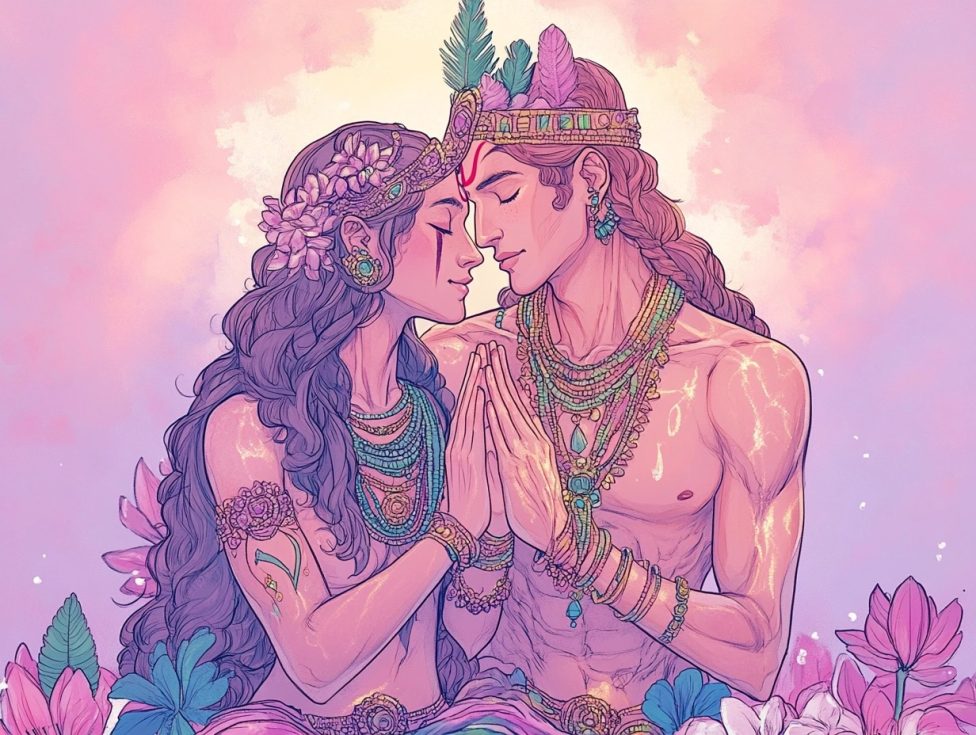
Not long ago, I attended a small interfaith gathering where the opening prayer began, “Great Spirit, neither father nor mother, creator of all…” It caught me off guard. I was raised hearing God referred to as “He,” “Him,” or “Heavenly Father.” Yet here was someone intentionally removing gender from the divine equation. As we went around the circle, people spoke of “the Universe,” “Gaia,” “the Source,” and other terms that skirted traditional masculine or feminine labels. Something about it felt both fresh and ancient—like we’d tapped into a more expansive sense of the sacred. Still, I could see it also stirred discomfort in those who preferred a conventional “He” or “Lord.” This tension—how we name and conceptualize God—reflects a bigger shift in some faith communities: a move toward non-binary or inclusive language for the divine.
Challenging Centuries of Patriarchal Language
For much of Judeo-Christian (and broader monotheistic) history, divinity has been coded in masculine terms—“God the Father,” “Lord,” “King of Kings.” Many religions also have goddesses, but Western Abrahamic faiths skew heavily male in official liturgy. In Catholicism, God is “He,” Jesus is the “Son,” priests are male, and while Mary is revered, she isn’t exactly a co-deity. This patriarchal tilt has long been criticized by feminists and progressive theologians who argue it entrenches gender hierarchy: if God is always “He,” does that imply men more closely reflect the divine image?
In the 20th century, feminist theologians like Mary Daly or Rosemary Radford Ruether challenged the church to reconsider paternal imagery. They pointed out that biblical texts do contain motherly, feminine metaphors for God—like a hen gathering chicks or the Hebrew word El Shaddai possibly linked to female connotations. Yet these were overshadowed by the dominant father-king-lord language.
The question, then, becomes: is calling God “She” enough to balance the scales, or is the real revolution labeling God as beyond gender—“They” or some non-binary term that transcends masculine/feminine categories altogether?
The Rise of Non-Binary Liturgies
In certain progressive Christian denominations (e.g., parts of the Episcopal Church, United Church of Christ), official or semi-official liturgies have begun experimenting with inclusive or gender-neutral language. Prayers might swap “Father” for “Parent,” or “Kingdom of God” for “Reign of God.” Some worship communities go further, using “Godself” instead of “Himself,” or rotating pronouns to underscore that no single gender pronoun can capture the divine.
Meanwhile, some Jewish congregations explore similarly inclusive language for Hebrew blessings, though it’s trickier because Hebrew is a heavily gendered language. Still, you find modern prayer books that reimagine certain references to God as female or neutral. And beyond these monotheistic settings, many pagan or Wiccan traditions easily blend masculine and feminine energies, or see the divine as a dance of both. But the new frontier is acknowledging that the divine might be not just male/female but something else entirely—non-binary or fluid.
Historical Echoes of the Androgynous Divine
Historically, certain mystical currents hinted at God’s androgyny or dual aspect. In Kabbalistic Judaism, the Shekhinah (a feminine presence of God) merges with the masculine dimension in cosmic union. Early Christian Gnostics sometimes spoke of an unknowable God transcending gender, with Christ representing a synergy of masculine and feminine. Ancient mythologies, from India to Greece, had deities who could shift gender or embody both at once (like Ardhanarishvara, a Hindu deity that is half-Shiva, half-Parvati). So the idea that “God is beyond male or female” isn’t new—it just hasn’t been mainstream.
What’s changing is that modern faith communities are explicitly adopting non-binary or gender-queer language for God, linking it to broader social acceptance of LGBTQ+ identities. If humans can be non-binary or fluid in gender expression, some argue, why not the divine?
Tensions with Orthodoxy
Unsurprisingly, many traditional religious institutions resist these shifts. For devout Catholics or conservative Protestants, altering centuries of liturgical language feels like theological tampering. They argue that Jesus called God “Father” for a reason and that scripture repeatedly uses masculine pronouns. From their perspective, God’s chosen self-revelation is paternal, so rewriting it risks distorting biblical truth.
They also worry it’s a slippery slope: if we start saying “God They/Them,” do we lose the personal relationship implied by “Father” or “Mother”? Some fear that removing gender from God might be a stepping stone to erasing key doctrines (like the Trinity’s father-son dynamic) or caving to secular culture’s push for gender inclusivity.
Yet defenders of inclusive language counter that if God is infinite, no single metaphor or pronoun suffices. “Father” is just one metaphor among many—shepherd, rock, vine. They see gender-neutral language as an expansion, not a destruction, of tradition. And they note that biblical references to God as mother or as having feminine qualities (like giving birth, nurturing) show that strictly masculine language was never the sole option.
Spiritual Implications of a Non-Binary God
For worshipers who embrace a non-binary view of the divine, the implications can be profound:
- Equality and Representation: If God isn’t inherently male, it challenges patriarchal assumptions in faith communities. Women, non-binary, or gender-fluid people might feel more affirmed in their spiritual identity, seeing themselves reflected in the divine mystery.
- Mystery Over Metaphor: Emphasizing God’s indescribable nature can rekindle awe—rather than boxing God into “He,” we remember God is beyond all human categories, which fosters humility.
- Discomfort or Liberation?: Some believers find it liberating to break from patriarchal language, while others feel uncomfortable, mourning the loss of comforting traditional images like the “Heavenly Father.” The shift can be jarring for those who found solace in paternal metaphors.
This tension often plays out in communal worship. One side might read the Lord’s Prayer as “Our Parent in heaven,” another side insists on “Our Father.” Disagreements flare up, sometimes causing splits in congregations that were otherwise unified in doctrine.
The Non-Binary Divine and Gender Justice
Proponents of non-binary God language often connect it to gender justice. They argue that if theology cements an exclusively male God, it normalizes men as closer to divinity, justifying male leadership or patriarchy. By acknowledging a God beyond gender, they believe we dismantle some of the theological underpinnings of sexism. It’s not that we erase male images of God, but we expand the palette to include female, non-binary, or cosmic metaphors, ensuring no single gender has a monopoly on the sacred.
Skeptics wonder if this move is more about political correctness than genuine theology—an attempt to align religion with progressive social norms. But from a faith perspective, many see it as returning to the biblical notion that all people are created in the divine image, meaning no single gender fully encapsulates the Imago Dei.
Examples of Inclusive Practices
- United Church of Canada: Some congregations replace “He/Him” with “God” or “Godself” in prayers.
- Episcopal Diocese of Washington: Proposed resolutions encouraging use of expansive or inclusive language for God.
- Quakers: Often address God as “Spirit” or “Light,” avoiding gendered pronouns altogether.
- Neopagan & Wiccan Circles: Already comfortable with multi-gendered deities, they sometimes talk about the “Divine as They,” or conceptualize deity as a dual or triple aspect (Maiden-Mother-Crone, for instance).
These shifts are partial and uneven—some parishes or congregations embrace them while others hold tight to tradition. Still, it signals a broader conversation about how language shapes belief, identity, and power dynamics in spiritual communities.
Encountering Resistance and Reconciliation
The debate can get heated. Congregants who love the paternal language might feel an emotional rupture if pastors drop “Our Father.” They might suspect a slippery slope of theological liberalism. Conversely, non-binary or feminist believers might feel excluded by persistent male language, seeing it as a refusal to acknowledge their lived reality.
In best-case scenarios, communities approach the topic gently. They might alternate references—some prayers use fatherly metaphors, others motherly or neutral ones. Pastors might explain the biblical basis for diverse images of God, fostering empathy among those who prefer more traditional pronouns. Over time, people see that exploring new language can be a supplement rather than a subtraction.
Conclusion: Searching for a Name That Cannot Be Named
Ultimately, the move toward non-binary or inclusive God language underscores a timeless truth: the divine transcends all human labels. Religious traditions have always wrestled with the inadequacy of words—hence the mystical claim that God is beyond all names. The push to say “Mother-Father God,” or “Great Spirit,” or “They/ Them,” is, in a sense, just another chapter in that eternal quest to honor the infinite.
Yes, the conversation is tangled up in modern gender politics, but that might simply reflect the broader cultural shift toward recognizing diverse gender identities. If we accept that God encompasses all that is and more, it seems logical that God would surpass the binary structures we humans invented. For some, this revelation is liberating, a sign of spiritual evolution. For others, it’s disorienting, a step away from cherished traditions. But maybe that friction is precisely where growth happens—where faith communities learn to speak about the sacred in ways that echo both ancient insights and contemporary inklings of justice. Because if God is indeed bigger than any box we place the divine in, then embracing non-binary language might be less about novelty and more about humility before the cosmic mystery that refuses to be pinned down as simply “He” or “She.”





Leave a Reply