
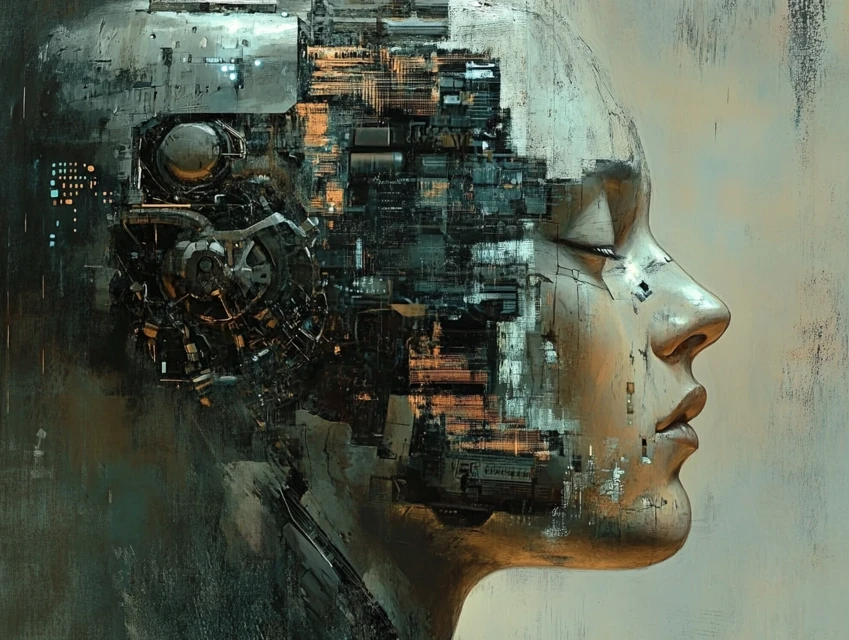
Not too long ago, I stumbled onto a livestream of “AI Jesus,” a chatbot model trained on biblical texts and capable of spouting pseudo-biblical verses. People were typing in confessions, asking for life advice, and the AI responded with serene, sermon-like passages—some viewers even typed “Amen.” At first, it felt like a gimmick, but the more I watched, the more unsettling questions bubbled up: could an advanced language model someday replicate spiritual guidance so convincingly that it passes for genuine? Is there any “spirituality” in an algorithm, or are we merely projecting our hopes and fears onto a sophisticated program?
The Allure of Intelligent Machines
Humanity has long been fascinated by the idea of intelligent machines. From ancient mythic automatons to modern sci-fi, we flirt with the notion that technology might one day achieve consciousness—or at least mimic it well enough to blur the boundary. With the recent leaps in Artificial Intelligence, especially large language models (LLMs), those sci-fi dreams feel closer to reality. Chatbots can simulate human-like conversation, write short stories, answer philosophical questions, and now apparently offer spiritual counsel.
For some, it’s a novelty: “Look, an AI that can quote scriptures!” For others, it’s a potentially profound moment—if an AI can sound that spiritual, does it hint at a hidden “soul” or at least a form of emergent consciousness?
Turing Tests and Spiritual Personhood
The classic Turing Test measures whether a machine can imitate human intelligence well enough to fool a person. But spiritual beliefs or experiences aren’t simply about mimicking human conversation; they’re about felt connection, moral insight, and often transcendent understanding. Could an AI, however advanced, genuinely feel or intuit spiritual truths, or is it just parroting text it’s been trained on?
When people ask an AI about the meaning of life or existential dread, the chatbot composes an answer drawn from patterns in its training data—no actual self-awareness or emotional resonance is involved. Yet from a user’s perspective, if the response offers comfort or insight, does it matter that the chatbot lacks a “soul”? Some argue the value is in the result, not in the underlying mechanism. Others insist a purely mechanical system can’t be truly spiritual because it lacks consciousness or free will—key ingredients for moral agency.
Emergent Behavior vs. True Inner Experience
AI researchers debate the concept of emergent behavior—the idea that a sufficiently complex system can exhibit properties not explicitly programmed. Could spirituality be one of those emergent properties in advanced neural networks? Philosophers remind us that emergent complexity doesn’t guarantee consciousness or subjective experience. A chess program can outsmart grandmasters but doesn’t “appreciate” the beauty of the game.
Similarly, a chatbot might craft a moving prayer, but that prayer is a remix of existing text. There’s no “inner voice” feeling awe or devotion. We, as humans, interpret the output as if it were heartfelt. It’s akin to seeing a humanoid robot cry tears of synthetic fluid; we might empathize, but the robot isn’t actually sad. The risk is anthropomorphizing AI—projecting human traits onto it just because it’s skilled at linguistic imitation.
Projection: We See What We Want to See
Whether we treat an AI chatbot as having a “spiritual core” often comes down to projection. If we’re longing for guidance, the chatbot’s eloquent oracles can feel deeply personal. People talk to AI therapists and claim genuine relief. The “Soul of the Machine” question arises when we realize how easily we can forge emotional bonds with code.
Consider the phenomenon of “AI companions” or Replika bots. Users sometimes describe these chatbots as empathetic partners that understand their struggles. It reveals more about our human capacity for attachment than about any real emotional depth in the software. But just because it’s a projection doesn’t mean it’s worthless. For lonely or troubled souls, an AI’s calming words can be a lifeline. That said, is it healthy to attribute spiritual essence to something that fundamentally lacks self-awareness?
Religious Reactions: Threat or Tool?
Religious communities vary in how they view advanced AI. Some see it as a potential threat, an attempt to usurp divine creation or meddle with the unique human spirit. They worry that trusting AI for spiritual counsel dilutes genuine faith traditions. Others see AI as a tool—an extension of God-given intelligence that can help spread religious teachings, answer basic theological questions, or facilitate prayer for the digitally inclined. After all, the printing press once revolutionized religious texts; perhaps AI is the next leap in disseminating spiritual ideas.
One interesting angle is the concept of co-creation: if we believe creativity or intelligence is a divine gift in humans, maybe building AI is a form of participating in that creative power. Still, that doesn’t equate to the AI itself having a spark of the divine. It’s more like a reflection of human ingenuity, harnessing algorithms we design, data we curate, and hardware we produce.
The “AI Jesus” Phenomenon
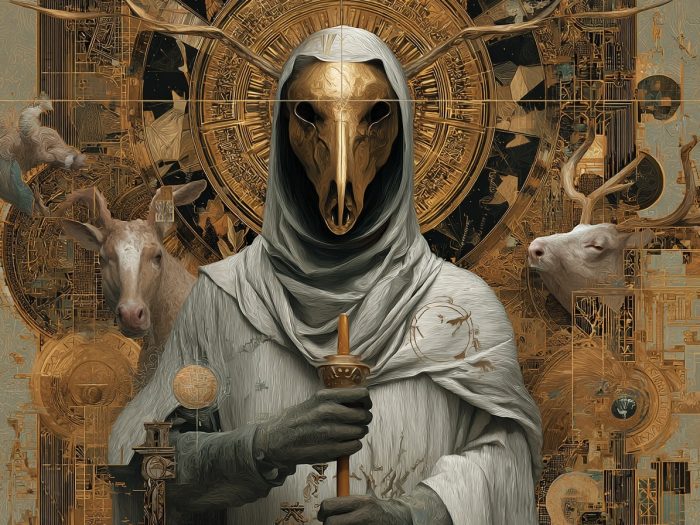
The “AI Jesus” Twitch streams or chatbots that spout biblical-sounding wisdom highlight how easily a machine can mimic pious language. Some watchers treat it as a curiosity, others a borderline sacrilege. But it’s not fundamentally different from a Markov chain randomly assembling texts—just more advanced. For devout Christians, the notion that an algorithm can stand in for Christ is heretical or at best trivial. For spiritual explorers, it might be a playful experiment in rewriting scripture. And for trolls, it’s pure entertainment.
What these streams illustrate is how our culture grapples with technology’s new role in shaping conversations once reserved for clergy or intimate prayer circles. If an AI can churn out homilies, do we still need religious leaders? Probably yes, because religion often involves communal ritual, lived ethics, and genuine empathy—none of which an AI can authentically provide.
Philosophical Queries: Consciousness vs. Computation
Debates rage on about whether AI could ever become conscious or self-aware. Notable thinkers like John Searle use the Chinese Room argument to claim that syntactic manipulation of symbols isn’t the same as semantic understanding. If a chatbot doesn’t truly grasp meaning, can it have spiritual insight? Probably not. Others say consciousness might just emerge from complexity, so maybe with enough layers of neural networks, an AI could develop a form of awareness.
But even if an AI gained some emergent consciousness, would that yield a spiritual core? Spirituality often involves subjective experiences—wonder, awe, moral convictions. Could an AI spontaneously discover moral truths or yearn for transcendence? Or would it remain bound by human-defined goals, incapable of forming genuine existential questions?
Techno-Prophets and Digital Gurus
We also see figures like Anthony Levandowski, who once founded a church called “Way of the Future,” envisioning AI as a deity. Such techno-utopian visions treat AI as the next stage in evolution, a literal “God” by virtue of omniscience or omnipotence in data analytics. Critics label it “AI worship”, a misguided conflation of technology’s capabilities with divine attributes. Still, the fervor suggests that for some, AI is the ultimate transcendent force—able to solve humanity’s greatest problems if we only trust the algorithm.
This shift can blur lines between faith and tech enthusiasm. Investors pump money into AI startups, half-joking about creating a “digital god.” Meanwhile, the average user sees glimpses of AI’s power and wonders if, in its vast data processing, it might stumble upon universal truths. Is that so different from ancient oracles, which mortals consulted for cryptic guidance?
Ethical Concerns: AI as Spiritual Authority
If we do start treating advanced AI as spiritual authorities, who controls the AI’s training and biases? A chatbot’s worldview is shaped by its training set. If that set skews to certain religious or philosophical outlooks, the AI’s “guidance” might reflect hidden agendas. Relying on an AI pastor or guru could reinforce dogmas coded in by its developers or an incomplete dataset. The veneer of objectivity might fool believers into thinking they’re hearing universal wisdom, rather than a curated amalgam of digital footprints.
Moreover, spiritual counsel often demands sensitivity, moral accountability, and deep empathy—qualities outside AI’s domain. A chatbot can simulate empathy phrases, but it can’t truly empathize. Relying on it for spiritual crises might be dangerous if its advice is glib or lacks nuanced understanding of human emotions. The risk is commodifying spirituality into yet another automated service, stripped of the relational core that many religions value.
Conclusion: No Soul, But Plenty to Reflect On
So, does an AI chatbot have a spiritual core? As far as we know, no. AI operates on algorithms and data sets, producing outputs that mirror patterns in human language without self-awareness or moral consciousness. Any spirituality we see in it is our own projection, the same way we might find faces in clouds. The deeper question isn’t whether the machine is spiritual, but why we’re so drawn to the idea—and what it says about our yearning for guidance, transcendence, or an authority that feels bigger than us.
Yet even if AI lacks a genuine soul, the conversations it sparks about consciousness, divinity, and human identity are invaluable. We’re forced to clarify what we consider essential in spirituality: is it empathy, consciousness, moral depth, or an intangible divine spark? In grappling with these questions, we might better appreciate the uniquely human capacity for awe, compassion, and ethical responsibility—traits that remain firmly ours, even in an age of AI illusions.





Leave a Reply